
Support
4 min read
Bihar's strawberry subsidy: what Strawberry Vikas Yojana actually pays
₹3,36,000 a hectare, subsidised seedlings and packaging — the one state scheme aimed at strawberry specifically. Who qualifies, what it covers, and how to apply.
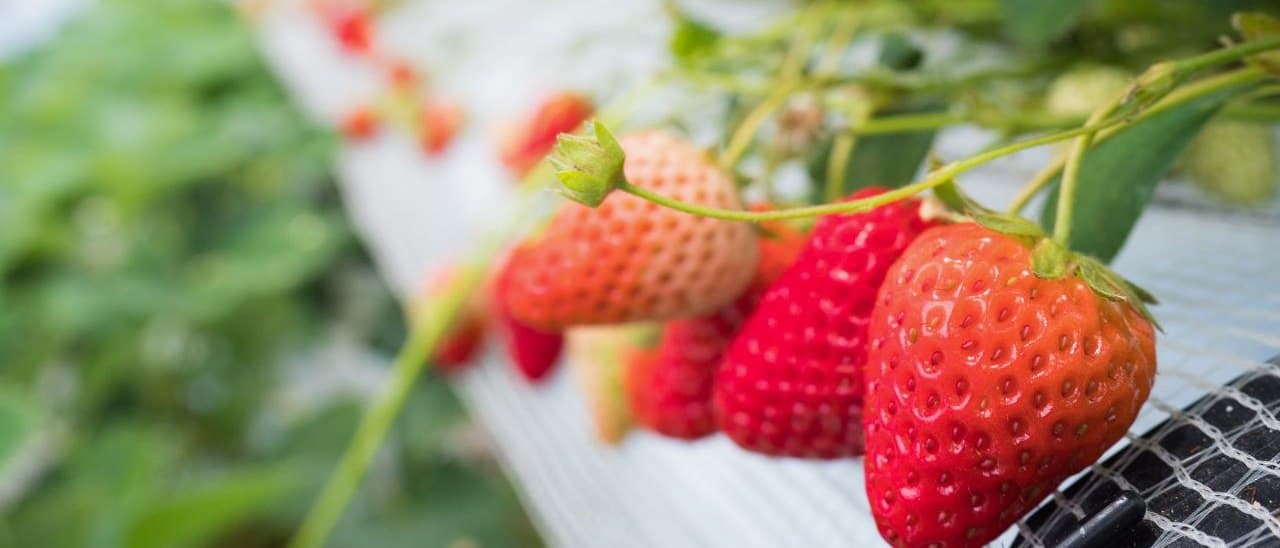
Most horticulture support in India reaches strawberry sideways — a polyhouse subsidy here, a drip subsidy there, none of it written with this crop in mind. Bihar's Strawberry Vikas Yojana is the exception. It names the crop in the title.
It sits under the umbrella Mukhyamantri Bagwani Mission, run by Bihar's Department of Agriculture, whose broader purpose is to push commercial horticulture in the state. This component exists to expand strawberry area specifically, and it does that by subsidising the two things that actually stop people planting: planting material and packaging.
Eligibility is limited to Bihar, and to twenty districts within it. Growers elsewhere cannot apply — but the structure is worth reading anyway, because it is the clearest statement yet by any state that strawberry is a commercial crop worth funding, and because what it chooses to subsidise says something useful about where the money actually goes.
What it pays
| Benefit | Amount |
|---|---|
| Financial assistance | ₹3,36,000 per hectare |
| Wooden packing boxes | 40% subsidy — ₹4.40 per piece against a ₹11 unit cost |
| Small plastic boxes | 40% subsidy — ₹1 per piece against a ₹2.50 unit cost |
| Planting material | Quality seedlings provided |
The per-hectare figure is the headline, but look at what sits under it. Subsidising packaging is an unusually well-aimed intervention for this crop. Strawberry is lost between the field and the buyer more often than it is lost in the field, and a grower who cannot afford proper boxes ships fruit that arrives a grade down. It is a small line that protects a large one.
The seedling provision matters for the same reason. Planting material is roughly half the cost of establishing a crop — see what an acre actually costs — so any scheme that supplies it is attacking the single largest barrier to entry.
Who can apply
- Resident of Bihar, and a farmer
- Farming in one of twenty named districts: Gopalganj, Jehanabad, Lakhisarai, Saran, Supaul, Aurangabad, Begusarai, Bhagalpur, Gaya, Katihar, Kishanganj, Munger, Muzaffarpur, Nalanda, West Champaran, Patna, East Champaran, Purniyan, Samastipur and Vaishali
- Holding between 0.25 acres (0.1 ha) and 5 acres (2 ha)
- Registered on the DBT portal
The land ceiling is worth noting: this is aimed at smallholders, not estates. And the floor of a quarter acre is a sensible one — it is close to the area at which a first-time strawberry grower should be learning the crop anyway.
Tenant farmers are not excluded. Ryot farmers apply on land documents; non-ryot farmers apply on a contract form.
Allocation is reserved: 78.56% general category, 20% Scheduled Castes, 1.44% Scheduled Tribes, with 30% women's participation. Selection within that is first come, first served — which is the practical point. Being eligible and being early are different things, and this scheme rewards the second.
How to apply
It is two stages, and the first one has a waiting period people miss.
Stage one — DBT registration. Register on the Bihar DBT Agriculture portal using Aadhaar verification (OTP, biometric or IRIS). You will confirm Kisan Credit Card details, then complete farmer details, land information and bank account, and validate by OTP to generate a Registration ID.
Then wait 48 hours. Applications for the scheme only open to you once that period has passed and you have your 13-digit registration number. Registering the day before a deadline does not work.
Stage two — scheme application. On the official application site, confirm the checkbox and proceed, select applicant type, enter your DBT registration number and pull your details. Complete address and land details, upload documents, submit, and keep the generated Application Number — you can also print the completed form.
Documents
For DBT registration: Aadhaar (linked to a mobile number), passport photograph, farmer details, land information and bank account.
For the scheme application: passport photograph, contract form if you are a non-ryot farmer, and land ownership or revenue receipt where applicable. If your name is not clear on the land record, a genealogy document must be attached alongside it.
Before you rely on any of this
Scheme terms move — amounts get revised, district lists change, and allocations are periodically reset. Everything above is as published on the government's own scheme portal at the date on this page, and the figures are quoted rather than estimated. Verify against the official guidelines and the application portal before committing to a planting, and treat a first-come-first-served scheme as one where the answer to "should I start the paperwork now?" is almost always yes.