
Planting
4 min read
Winter Dawn strawberry seeds will not grow Winter Dawn
The packets are real, the seeds inside them are real, and the plants they produce will not be the variety on the label. What is actually being sold, the one strawberry that does come true from seed, and what to buy instead.
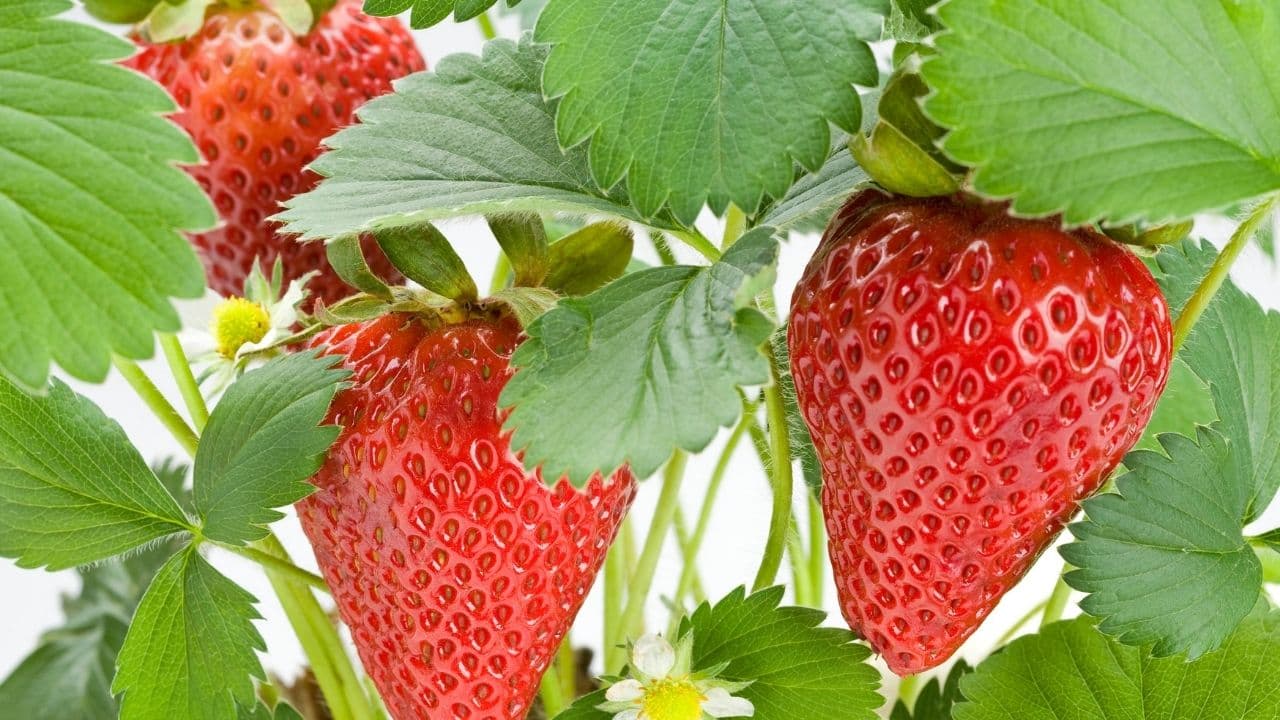
Search for Winter Dawn strawberry seeds and you will find packets for sale, some of them for less than the price of a cup of tea. The seeds in them are usually real seeds. What they will not do is grow Winter Dawn.
This is not a warning about one dishonest seller. It is how the crop works, and it applies to every named strawberry variety you can think of.
A strawberry seed is a real thing
Start with what is true. Those small dots on the outside of the berry are achenes, and each one is a dry fruit with a seed inside it. A single berry carries a couple of hundred of them. Strawberry seed exists, it germinates, and it grows strawberry plants.
So the packets are not selling you sand. The problem is further along.
Why the seedlings will not be Winter Dawn
A named strawberry variety is not a seed line. It is one individual plant, selected once and then copied.
Winter Dawn was a single seedling picked out of a University of Florida breeding programme and released in 2005. Every Winter Dawn plant grown anywhere in the world since is a runner off that original plant, or a runner off a runner. It is a clone. That is the only way the variety stays the variety.
Grow that plant from seed instead and you break the copy. The cultivated strawberry is an octoploid — eight sets of chromosomes — and a deeply mixed one. Its seed does not come true. Each seedling is a fresh shuffle of the parents' genetics: a new, unnamed individual that has never existed before and will differ from its parent in vigour, fruit size, firmness, chill requirement and flavour.
A few will be interesting. Most will be worse than the parent. That is precisely why breeding programmes raise thousands of seedlings to release one variety — and why the one they release is then multiplied by runner, never by seed.
So a packet labelled "Winter Dawn seeds" is describing the parent, not the contents. Even if that seed genuinely came off a Winter Dawn plant, what grows is not Winter Dawn.
What the listings are actually selling
Look closely at the results for that search and the pattern gives itself away.
The packets that rank are mostly generic strawberry seed — no variety claimed anywhere on the listing once you open it. The listings that do say Winter Dawn are, almost without exception, selling plants, not seeds: runners and plugs at ₹4 to ₹10 apiece from nurseries and trade marketplaces. Those are the real thing, and they are what the search should have led you to.
Errors in the descriptions are worth learning to spot, because they tell you the seller does not know the variety. One large marketplace listing calls Winter Dawn "everbearing" — it is short-day, which is a different flowering habit entirely and the whole reason it suits an Indian winter. Another spells it "winter down". A seller who has the flowering type wrong is not a seller who has the genetics right.
The one strawberry that does come true from seed
There is an honest exception, and it is worth knowing so you can tell the two apart.
Alpine strawberry — Fragaria vesca, the woodland strawberry, sold under names like Alexandria and Ruegen — is genuinely grown from seed and comes reasonably true. It is a different species from the cultivated strawberry, diploid rather than octoploid, and largely self-pollinating. Seed is the normal way to propagate it.
What you get is a small, intensely aromatic berry on a compact runnerless plant. It is a delightful thing to grow in a pot. It is not a commercial crop, it will not fill a punnet, and it is not a substitute for Winter Dawn or Camarosa.
If a seed packet says Fragaria vesca, alpine or woodland strawberry, it is probably honest. If it names a commercial variety, it is not.
What to buy instead
Runners. For Winter Dawn specifically, and for every other variety on this site, planting material means certified runners or plugs from a nursery — which is also, incidentally, what most of those search results were quietly offering you.
Two pages here cover the rest of it: runner sourcing and the planting window for where the material comes from and what to check before you accept a delivery, and Winter Dawn itself for why the variety earns its place on the plateau — low chill, early fruit, and crown rot resistance that lets you multiply your own.
A runner planted in the last week of September fruits that same season. It is also genetically identical to its mother, so the variety you chose is the variety you get.
If you want to grow from seed anyway
Nothing here says do not do it. Raising strawberries from seed is a genuinely interesting thing to do and every variety that exists began exactly that way.
Just go in knowing the terms. You will wait the better part of a year and a half for fruit instead of one season. Every plant will be different from every other. And whatever you end up with, it will not be the variety printed on the packet — it will be something new, which is the fun of it and the entire problem with it as a way to plant a field.
Buy the plant, not the packet. A named strawberry variety only exists as a clone. The moment it goes through seed it stops being that variety, whatever the label says — so for anything you intend to sell, start from runners.
Source
US Plant Patent PP21558 — 'Winter Dawn' strawberry plant, University of Florida, 2005. patents.google.com/patent/USPP21558P3 · University of Florida strawberry cultivars (HS1199). gcrec.ifas.ufl.edu