
Production
4 min read
Where strawberries are grown in India
One plateau in Satara district grows about 85% of the national crop. Here is what the other 15% is, why the map is spreading, and why you will not find a state-by-state production table on this page.
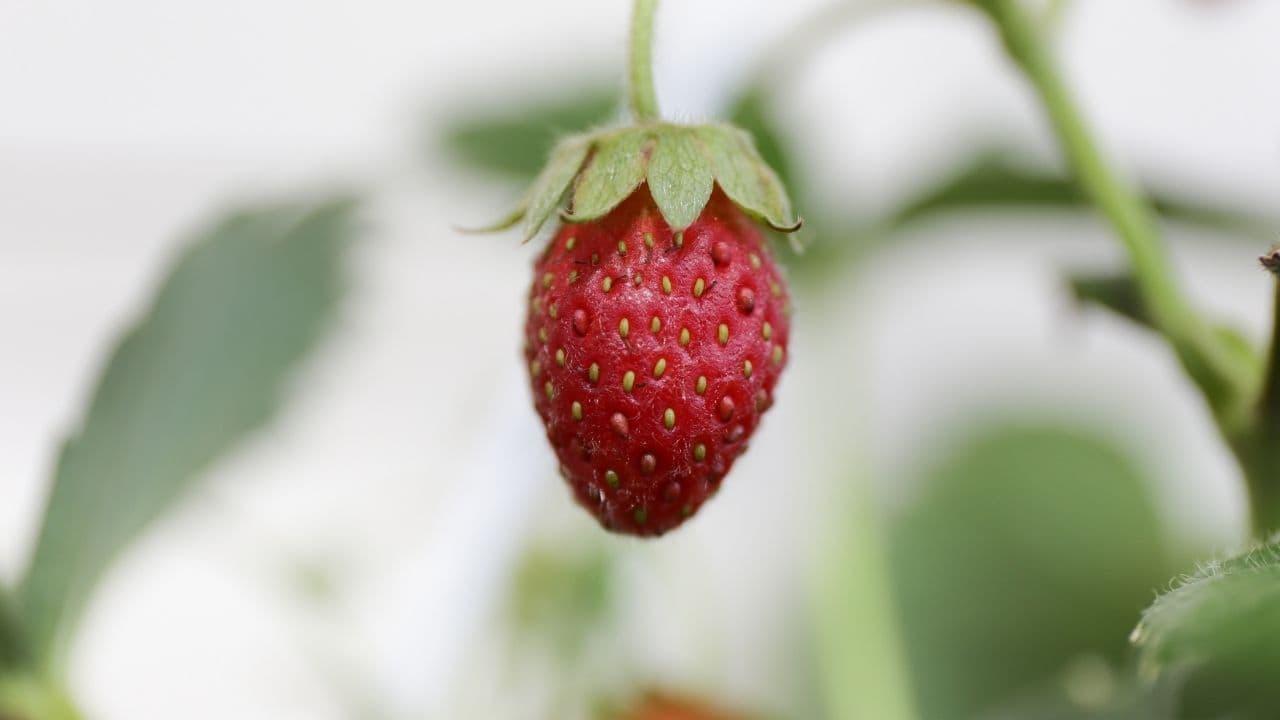
The short answer is that one plateau grows most of it.
India produced 26,930 tonnes of strawberry in 2024–25, and roughly 85% of that came from the Mahabaleshwar–Panchgani belt in Satara district, Maharashtra. That is around 23,000 tonnes off one plateau, and somewhere near 4,000 tonnes from the entire rest of the country.
No other fruit in the Indian basket is concentrated like this.
Why that plateau
Mahabaleshwar sits at roughly 1,300 metres. That altitude is the whole reason the belt exists: it delivers cool nights through a subtropical winter, which is what a low-chill short-day variety needs to flower and hold fruit while the plains are still too warm.
Around that climate accident, an ecosystem grew. Roughly 5,000 grower families work the crop there. The runners, the labour that knows how to pick strawberry without bruising it, the crates, the vehicles leaving for Mumbai and Pune overnight — all of it exists because the crop has been there for decades. Mahabaleshwar strawberry has carried a GI tag since 2010.
A new grower elsewhere is competing with the climate and with sixty years of accumulated plumbing.
Where the other 15% is
Strawberry is grown in far more of India than the production figures suggest, and the map is what is changing fastest about this crop.
Himachal Pradesh — Sirmaur and Solan. As important as its fruit is its nurseries: the high-altitude belt is where a large share of the country's planting material comes from, because runners need chilling that the plains cannot give them. Many growers who have never been to Himachal are planting its runners.
Jammu & Kashmir — around Srinagar, with a genuinely different season from the Deccan, which is the interesting part commercially.
Uttarakhand — the Nainital and Dehradun districts, on the same logic as Himachal.
The Nilgiris, Tamil Nadu — Ooty and around it, again altitude doing the work, and the only significant southern hill production.
Karnataka — Kolar, Chikkaballapur and the peri-urban belt around Bengaluru, much of it under protection and much of it aimed at the city rather than a mandi.
Bihar — the newest entrant of consequence, and the only state with a subsidy scheme aimed at strawberry specifically. We have written about what Strawberry Vikas Yojana actually pays.
Punjab, Haryana, western Uttar Pradesh and Rajasthan — scattered peri-urban protected cultivation near large cities, growing because the fruit is fragile and a short supply chain is worth more than an ideal climate.
Meghalaya and the north-east, and pockets of West Bengal — small, real, and rarely counted.
Why there is no state-by-state table on this page
You will find tables online claiming precise tonnages for eight or ten states. We are not reproducing one, and you should be careful with the ones you find.
Strawberry is a small crop in national terms — 26,930 tonnes against millions of tonnes of banana or mango. Crops that small frequently do not get their own line in state horticulture reporting; they sit inside an "other fruits" aggregate. We have not found a current, attributable state-by-state production table for strawberry that we would put our name to, and the figures that circulate are mostly recycled between blogs without a source between them.
This is the same reason there is no price table on this site, and no capex figure in the polyhouse comparison. A number with no provenance is worse than no number, because it gets planned against.
What is solid is the national total, the Maharashtra share, and the direction of travel. That is what this page gives you.
The concentration is the story
For anyone buying fruit, the one-district fact is the single most useful thing on this page.
Because roughly 85% of the crop comes from one plateau across a five-month window, weather in Satara is a national price event. There is no second production region large enough to absorb a bad week. A hailstorm on the plateau in January moves the price in Delhi, and no amount of supplier diversification within India fully insulates you from it.
That is a structural fact about the crop, not a seasonal one, and it is unlikely to change for years — though it is slowly starting to.
If you are deciding where to grow
You do not need to be in Mahabaleshwar. You need three things, and only the first is about geography.
Cool nights through the fruiting window. Either from altitude, or from a winter that gets genuinely cold at night, or bought back with a structure. This is why the belt, the Himalayan foothills and the Nilgiris dominate — and why Bihar and peri-urban Karnataka are viable anyway.
A market you can reach the same day. Strawberry does not travel well, and grade is where your money is. Being three hours from a large city is frequently worth more than being at the perfect altitude eight hours away.
Planting material you can actually get. Which for most of the country means a Himachal or Kashmir nursery, booked months ahead — covered in runner sourcing and the planting window.
Get those three and the state you are in matters far less than the internet suggests.
The crop is concentrated; the opportunity is not. Most of India's strawberry comes off one plateau, but the fastest growth is peri-urban and protected, near cities, in states that grew none of it a decade ago. Plan against cool nights and a short route to market, not against a map.
Source
National horticulture production data, 2024–25 — nhb.gov.in · National Horticulture Board, model project for strawberry — nhb.gov.in/report_files/strawberry