
Systems
4 min read
Protected cultivation: tunnels, polyhouses and table-top
There is more between an open field and a full polyhouse than most growers are shown, and the cheapest option captures most of the benefit.
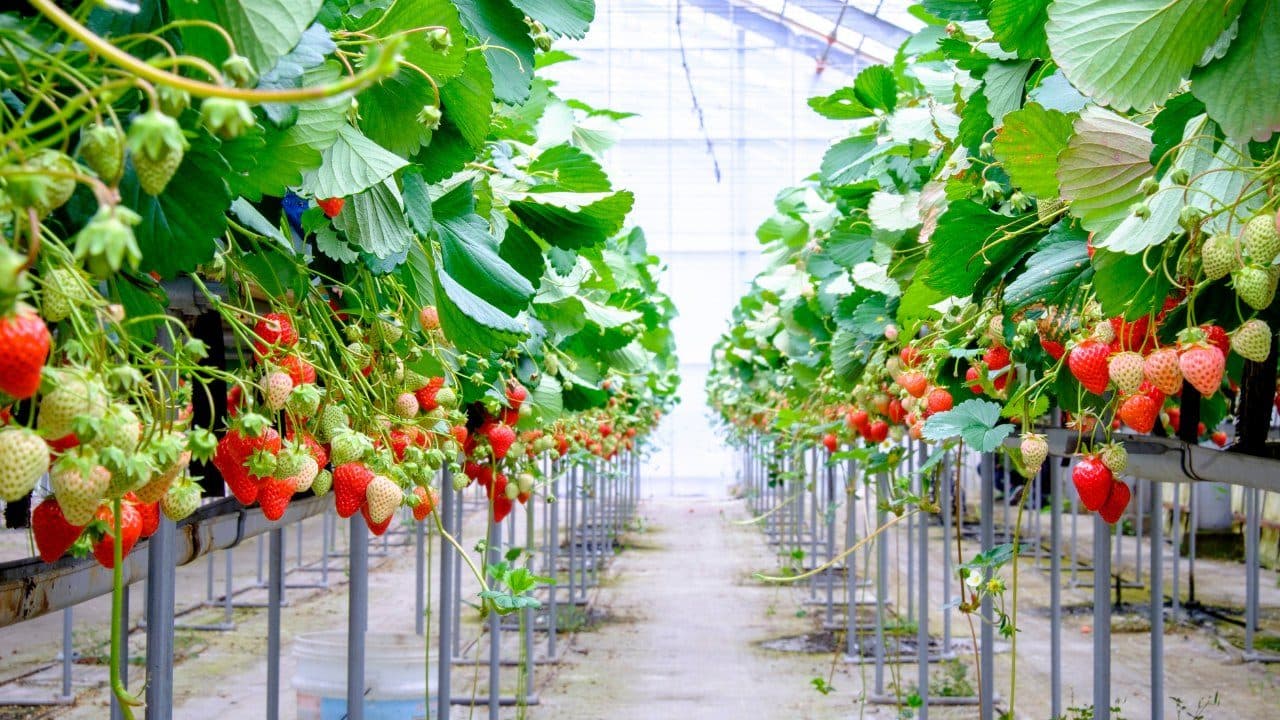
The conversation about protected cultivation usually arrives as a binary: open field, or a polyhouse costing more than most growers have. That framing is set by the people selling structures, and it skips the part of the range where most Indian growers should probably be looking.
There are at least four steps between bare ground and a fully controlled house, and the returns are not evenly spaced along them.
What protection is actually buying
Before comparing structures, be clear about which problem you are solving. They are different problems and they justify different amounts of money.
Rain exclusion. The main event in India, and the cheapest to buy. It is not primarily about yield — it is about not losing a January pick outright. If you have watched a week's fruit split after unseasonal rain, you already know what this is worth to you.
Humidity and air movement. Harder, and the reason cheap structures sometimes make things worse. A badly ventilated house gives you worse grey mould and worse powdery mildew than open ground, because you have trapped the humidity rather than excluded the rain.
Season extension. The most valuable and the least reliable. Fruit at the shoulders of the season is worth multiples of the January price, but shoulder cropping is where plans slip.
Working conditions. Rarely mentioned and quietly significant. Picking every second day at peak is hard labour, and a raised system that removes the bending changes how many pickers you can keep.
The four steps
1 · Plastic mulch and drip on open beds. Not protection in the usual sense, but it is the first thing that separates fruit from wet soil and it is already in most budgets. If it is not in yours, start here rather than anywhere else on this page.
2 · Rain shelters and walk-in tunnels. The step almost nobody is offered. A simple rain-excluding structure captures most of the rain-protection benefit at a fraction of a polyhouse, without the ventilation complexity that catches out first-time growers. For a grower moving from half an acre to two acres, this is very often the right answer — and it is the option least likely to be recommended by anyone whose business is selling structures.
3 · Naturally ventilated polyhouse. Real control, real capex. The yield uplift is genuine and so is the improvement in grade share. The mistake growers make is buying the structure and keeping the same agronomy: a polyhouse amplifies whatever your management already is.
4 · Table-top or gutter systems under cover. Plants raised into troughs at working height, usually with fertigation. Highest capex, best working conditions, best control of root-zone conditions, and the furthest from how most of the belt currently farms. Treat it as a different business rather than an upgrade to the one you have.
Beyond these four sits the fully indoor vertical farm: racks under LED light, with every flower pollinated by hand, brush or bumblebee. It is rare in India and is a different business again. Garden & Acre's guide to strawberry vertical farming covers the varieties and conditions it needs.
The question that decides it
Not "what does it cost" but how often does weather actually cost you fruit here?
Count the seasons in the last five where rain or hail took a pick. Three or more, and protection is probably the highest-return capital available to you, at whatever level you can finance. Zero, and you are buying yield uplift rather than risk reduction — a much weaker case, and one that has to compete with simply doing the agronomy better.
The second question is whether your buyer pays for grade. If you sell into a mandi that prices by the crate, most of the quality advantage evaporates between your field and the auction floor. Fix the buyer before you fix the structure.
On the numbers
We do not publish capex figures or payback periods for structures. They vary by span, film grade, site and fabricator to the point where any single number would mislead, and the numbers in circulation are mostly supplied by people with something to sell.
Get three written quotations for your actual site. Then run the comparison yourself: net margin per acre open-field using your costs and your realised grade split, against net margin protected using the same prices and a grade share you can defend. The difference is what the structure buys per year. Divide the quoted capex by that, add financing, and you have a payback you can trust because you built it.
If the answer is longer than you can finance, the honest conclusion is that the structure is not right for this site yet — not that you should find a more optimistic yield assumption.
One thing worth knowing before you build
Ventilation is not a detail. Every failure mode of a cheap protected structure in a humid climate runs through still, wet air sitting in a canopy. Whatever you build, understand how air moves through it before the film goes on, and scout leaf undersides from the first week — the diseases that punish poor ventilation announce themselves underneath the leaf, not on top of it.