
Planting
3 min read
Propagating your own runners, and when to stop
Multiplying your own planting material changes the economics of the largest line in the budget. It also degrades quietly, and most growers find out two seasons too late.
Planting material is roughly half the cost of establishing an acre in the National Horticulture Board's model, and it is the largest single line in almost every real budget too. So the arithmetic of multiplying your own is obvious and tempting: a mother plant throws eight to fifteen usable runners, and runners cost labour rather than money.
The arithmetic is right. What it leaves out is that self-propagated material degrades, and it degrades invisibly.
Why it works
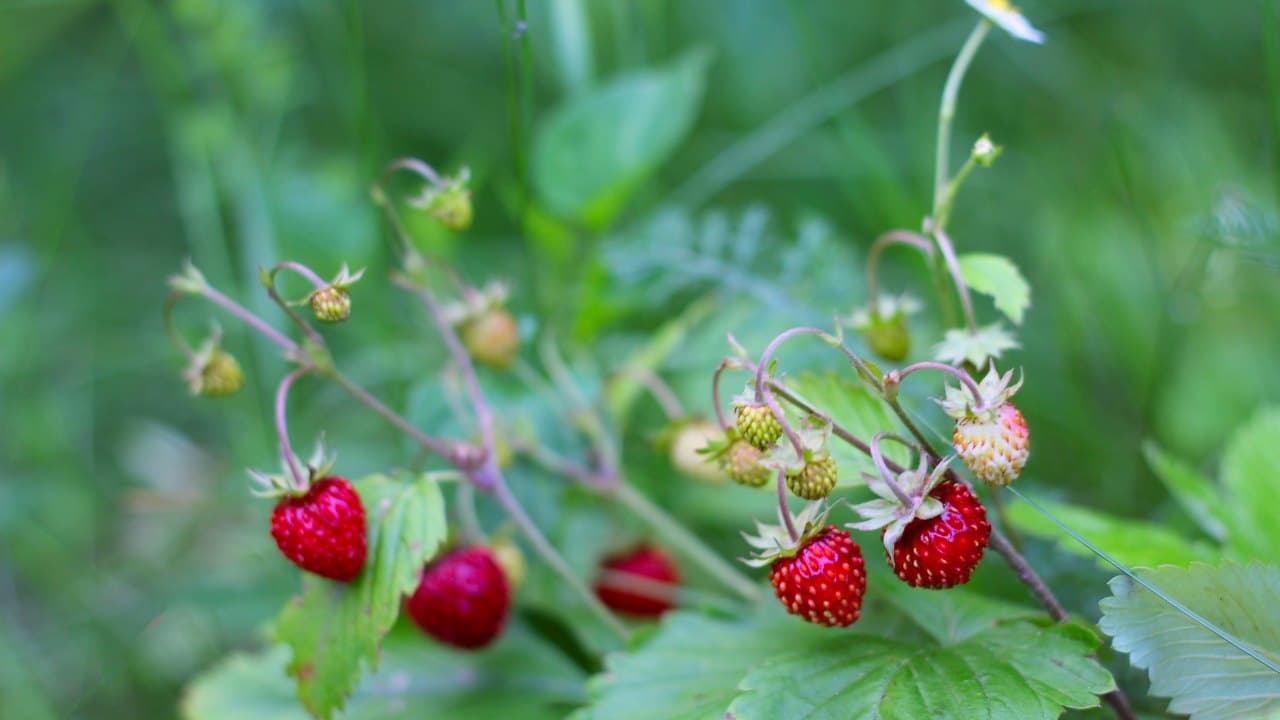
Strawberry propagates vegetatively by stolons — runners — so every daughter plant is a clone of the mother. There is no seed lottery, no segregation, no waiting for a plant to come true. What you multiply is exactly what you had.
At scale that is transformative. Run the figures on the density calculator: at typical spacing an acre needs somewhere over twenty thousand plants, and every rupee of plant price moves the budget by more than twenty thousand rupees. A grower who multiplies half their requirement has changed the shape of their season before planting a single runner.
Cultivars differ in how freely they do it. Chandler has excellent runner production — better than 'Tioga', which was the standard at the time it was released — and that trait is a large part of why it spread through India the way it did. Winter Dawn carries Colletotrichum crown rot resistance, which is precisely what makes on-farm propagation viable rather than a way to multiply disease.
Why it degrades
Virus load accumulates across clonal generations. Each round of propagation carries whatever the mother plant was carrying, plus whatever it picked up in the field, and none of it is visible.
The pattern growers describe is consistent. Year one from certified stock is fine. Year two, propagated on farm, is fine. Year three is slightly disappointing and gets blamed on the weather. By year four the yield is materially down and nobody can point to a cause, because there is no lesion to photograph and no pest to find.
That is the trap: the failure mode is a gradual slope, not a cliff, so there is never a season where the problem announces itself.
The rule that keeps it honest
Refresh from certified stock every second season at minimum. Multiply for one generation, then buy in again.
That is not a compromise between cost and quality — it is close to the best of both. You get the cost benefit on the bulk of your requirement while resetting the virus load before it compounds. Growers who stretch to a third or fourth generation are usually not making a decision at all; they are deferring one.
Practical notes
Decide before the season, not during it. Runners left on a fruiting plant compete with fruit. If you are propagating, plan which plants are for fruit and which are for multiplication, and treat them differently from the start. Trying to get both from the same plants gets you less of each.
Select the mother plants deliberately. The temptation is to multiply from whatever is convenient at the end of the season. Multiply from the plants that actually performed — vigorous, clean, true to type — and cull anything that looked off. You are choosing next year's crop.
Check the daughters like a delivery. Apply the same standard you would to bought-in material: crowns around 8–12 mm, roots white to cream and springy, two to three healthy leaves, and leaf undersides checked with a lens for two-spotted spider mite. Your own nursery is not automatically clean.
Keep the propagation area away from the fruiting field. Mite and disease move from a cropping field into a nursery bed as readily as they move anywhere else, and the whole point of the exercise is to produce material that starts clean.
When not to do it at all
If you are selling into export or modern trade, where consistency is the product, the case for buying certified material every season is much stronger. The premium buys predictability, and predictability is what those buyers are paying you for.
And if you have had crown rot or wilt in the field, do not multiply out of it. Soil-borne disease travels perfectly well in a runner, and you would be turning one bad block into a whole planting.